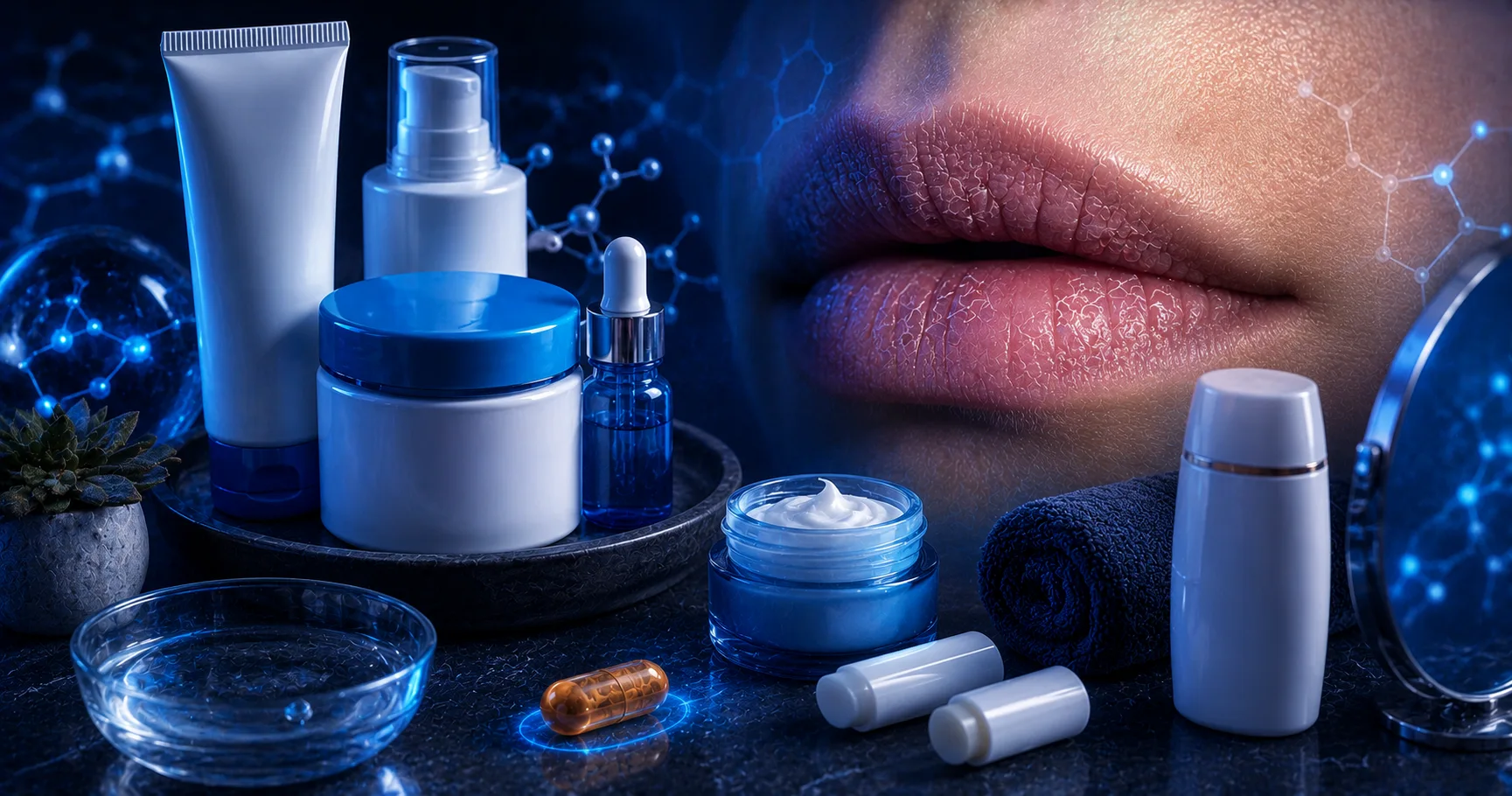
Accutane Lips: Why They Crack, How Long It Lasts, What Helps
Accutane lips start in week 1 and peak in month 2. What the drug does to the lips, how to fix cracking with a layering routine, and when to see a doctor.
What Accutane Does to the Lips
Accutane lips is the phrase patients use for the cracked, peeling, burning lips that show up in the first two weeks of isotretinoin, and the medical name is cheilitis. It is the most common side effect of the drug by a wide margin. Clinical reviews put the rate between 90 and 96 percent of patients, and a retrospective study of 1,743 isotretinoin users by Brzezinski and colleagues found cheilitis reported more often than dry nose, dry eyes and peeling skin combined.
The cause is simple. Isotretinoin shrinks sebaceous glands by up to 90 percent and cuts sebum output by 70 to 87 percent within the first weeks. Sebum is the skin's own lubricant, and the red part of the lip, the vermilion, has no sebaceous glands of its own. It borrows oil from the skin around it. When the drug turns that supply off, the lip has no backup, which is why accutane dry lips usually appear before the acne shows any sign of improvement.
Cheilitis starts within 1 to 2 weeks of the first dose, before acne improves. Start lip care on day one. Preventing cracks takes far less effort than healing deep fissures that have already formed.
When Accutane Lips Start, Peak and Go Away
Accutane lips timeline on a standard course
Onset
Days 5 to 14
Tightness, first peeling, mild redness
Peak
Weeks 3 to 12
Cracking, splitting, burning, bleeding corners
Plateau
Month 3 to end of course
Constant dryness, manageable with a routine
Recovery
2 to 4 weeks after the last dose
Sebum returns, cracking stops
Late
Beyond 3 months post-course
Rare persistent dryness, see below
The worst month for accutane lips is usually the second, when the dose is often raised to the full 0.5 to 1 mg/kg and the glands have fully shut down. Higher doses mean worse accutane lips. Patients on 20 mg protocols report far milder cheilitis than patients on 60 to 80 mg, which is one reason dermatologists sometimes lower the dose when lips split and bleed despite good care. The low dose Accutane article covers what that trade looks like in practice.
Two cosmetic changes come up in almost every forum thread. Lips look pinker on Accutane because the flaky outer layer is gone and the inflamed tissue underneath shows through. Lips also look fuller or "bigger" in the first months, which is mild swelling from irritation, not a permanent change. Both fade as the course ends. Hair shedding is the other cosmetic worry that fills the same threads, and the real rates are in does Accutane cause hair loss.
How to Fix Lips on Accutane: The Layering Routine
Most patients grab any balm, apply it twice a day and wonder why nothing improves. A single product rarely hydrates and seals at the same time, and twice a day is nowhere near enough during the peak months. The routine below is what dermatologists recommend for accutane dry lips, and the reapplication frequency is the part people underestimate.
- 1Step 1, hydrate: apply a ceramide or hyaluronic acid product first to pull water into the lip and rebuild the lipid barrier. CeraVe Healing Ointment works, as does any fragrance-free ceramide lip treatment.
- 2Step 2, seal: follow immediately with a petrolatum occlusive so the moisture cannot evaporate. Aquaphor is the standard answer here because it has no flavour, fragrance or menthol.
- 3Step 3, reapply: every 30 to 60 minutes during months one to three. Set a phone timer. Once lips dry out between coats, the previous coat did nothing.
- 4Night: a thick layer of plain petrolatum before sleep, and a humidifier in the bedroom if the air is dry.
Products That Work for Accutane Dry Lips
Lip products commonly used during isotretinoin
Aquaphor Healing Ointment
Petrolatum occlusive
Sealing layer, night use
CeraVe Healing Ointment
Ceramides plus petrolatum
First layer, barrier repair
Vaseline Original
Pure petrolatum
Budget sealant, no additives
Dr. Dan's Cortibalm
1% hydrocortisone acetate
Swollen, inflamed lips
Lanolin (Lansinoh)
Natural occlusive
Deep cracks, overnight
Cortibalm needs a note for anyone with severely inflamed accutane lips. Its 1 percent hydrocortisone acetate makes it a Class VII topical steroid, the weakest class, but it is a medicated product rather than a cosmetic balm. It helps when lips are red, swollen and burning rather than simply dry. Ask the dermatologist before using it for more than a week or two at a time.
Ingredients That Make Accutane Lips Worse
The best lip balm for Accutane is defined as much by what it leaves out as by what it contains. These ingredients irritate barrier-damaged skin and slow healing:
- 1Menthol and camphor: the cooling feeling is nerve irritation, and on cracked lips it prolongs the damage.
- 2Peppermint, eucalyptus and cinnamon oils: same irritant mechanism.
- 3Fragrance and artificial flavour: unnecessary triggers on inflamed tissue.
- 4Salicylic acid and other exfoliants: they strip the barrier you are trying to rebuild.
- 5Beeswax-heavy balms with no petrolatum: they sit on top without sealing.
For accutane dry lips that rules out most flavoured ChapStick, tingling or "medicated" cooling balms and peppermint Burt's Bees. Read the label before buying. Licking the lips is the other habit to break. Saliva gives a few seconds of relief, then evaporates and pulls more water out of the lip, so the lips feel drier and the cycle repeats.
When Cracked Corners Mean Infection
Ordinary accutane lips respond to the routine above within a week, and so do the corners in most cases. Cracked corners that do not are a different problem. Angular cheilitis, the sore red splits at the corners of the mouth, gives Candida albicans and Staphylococcus aureus a warm, moist place to grow, and once either is established, more balm will not fix it.
- 1Corner cracks that have not improved after 1 to 2 weeks of consistent moisturising.
- 2White or yellow buildup at the corners.
- 3Crusting, oozing or bleeding that returns after cleaning.
- 4Burning pain when opening the mouth wide.
Candida needs a topical antifungal such as clotrimazole. Staph needs a topical antibiotic such as mupirocin. Both are prescription decisions, so report the signs to the dermatologist. It is a minor complication when treated and a slow, painful one when it is not. Dry nasal passages that crack and bleed follow the same pattern and are covered in the Accutane nose article.
Do Accutane Lips Ever Go Away?
Yes, for almost everyone. The glands were suppressed, not destroyed, and they resume normal output within 2 to 4 weeks of the last dose. Most patients stop needing hourly balm within a month of finishing, and accutane lips become a memory rather than a daily routine.
A small group reports dry lips that persist for months or years after the course. The Reddit threads on "post-Accutane chapped lips" are real, and the usual explanation is that sebum output settles at a slightly lower baseline than before treatment, which most people never notice on the face but do notice on the lips. It is not dangerous, and a nightly petrolatum layer usually manages it. Persistent dryness with other symptoms, such as dry eyes or joint pain months after the course, is worth a follow-up appointment. Other patient-reported side effects are collected in the Accutane Reddit review.
Isotretinoin shrinks the oil glands around the mouth and cuts sebum output by up to 87 percent. The red part of the lip has no oil glands of its own, so it dries out first. The result is cheilitis: peeling, cracking, burning and sometimes bleeding lips, reported by 90 to 96 percent of patients.
Layer two products: a ceramide or hyaluronic acid hydrator first, then a petrolatum sealant such as Aquaphor or Vaseline. Reapply every 30 to 60 minutes during the first three months, use a thick layer at night, avoid menthol, camphor, fragrance and flavoured balms, and stop licking the lips.
Month two for most patients. The dose has usually been raised to the full 0.5 to 1 mg/kg by then and the sebaceous glands are fully suppressed, so cracking and splitting peak between weeks 3 and 12. Dryness then plateaus and stays manageable with a routine until the end of the course.
Yes. Sebum production returns within 2 to 4 weeks of the final dose and most patients stop needing frequent balm within a month. A small number report lips that stay drier than before for months or longer, which is usually a slightly lower sebum baseline and is managed with nightly petrolatum.
The dead outer layer peels away and the inflamed tissue underneath shows through, which makes lips look pinker. Mild swelling from irritation makes them look fuller during the first months. Both effects are temporary and fade after the course ends, and neither is a reason to change the dose.
Plain petrolatum products win: Aquaphor Healing Ointment, Vaseline or CeraVe Healing Ointment. They seal moisture in without irritants. For swollen, burning lips, Dr. Dan's Cortibalm with 1 percent hydrocortisone is a medicated option to discuss with the dermatologist. Avoid anything with menthol, camphor, peppermint or fragrance.
Accutane.org is an independent educational resource. We are not affiliated with any pharmaceutical manufacturer or healthcare provider. This content is for informational purposes only and does not constitute medical advice. Images on this site are illustrative artwork made for editorial purposes; they do not show real products, packaging or labels and are not an advertisement or an offer to sell.
Editorial Team
Comments (0)
Be the first to comment on this article.