Does Accutane Work? Success Rate, Mechanism and Who It Fails
Does Accutane work? The 85 percent success rate and its conditions, how isotretinoin shrinks the glands, who relapses, and why it fails some people.
The Success Rate
Does accutane work? For about 85 percent of patients who complete one full course at an adequate cumulative dose, yes, and the result lasts years. No other acne treatment comes close: topical retinoids and antibiotics reduce lesions by 40 to 60 percent while they are used and lose the effect when they stop, while isotretinoin produces 85 to 95 percent clearance and holds it. Studies following patients for three to five years report relapse in 20 to 30 percent, mostly minor, with 10 to 15 percent needing a second course. The 85 percent figure has two conditions attached, though: completing the course, and reaching 120 to 150 mg per kilogram total dose. Most of the confusion about whether the drug works comes from courses that met neither.
Isotretinoin is the only acne drug that changes the gland rather than managing the symptom. That is why it works after you stop taking it, and why an incomplete course does not.
How Accutane Works
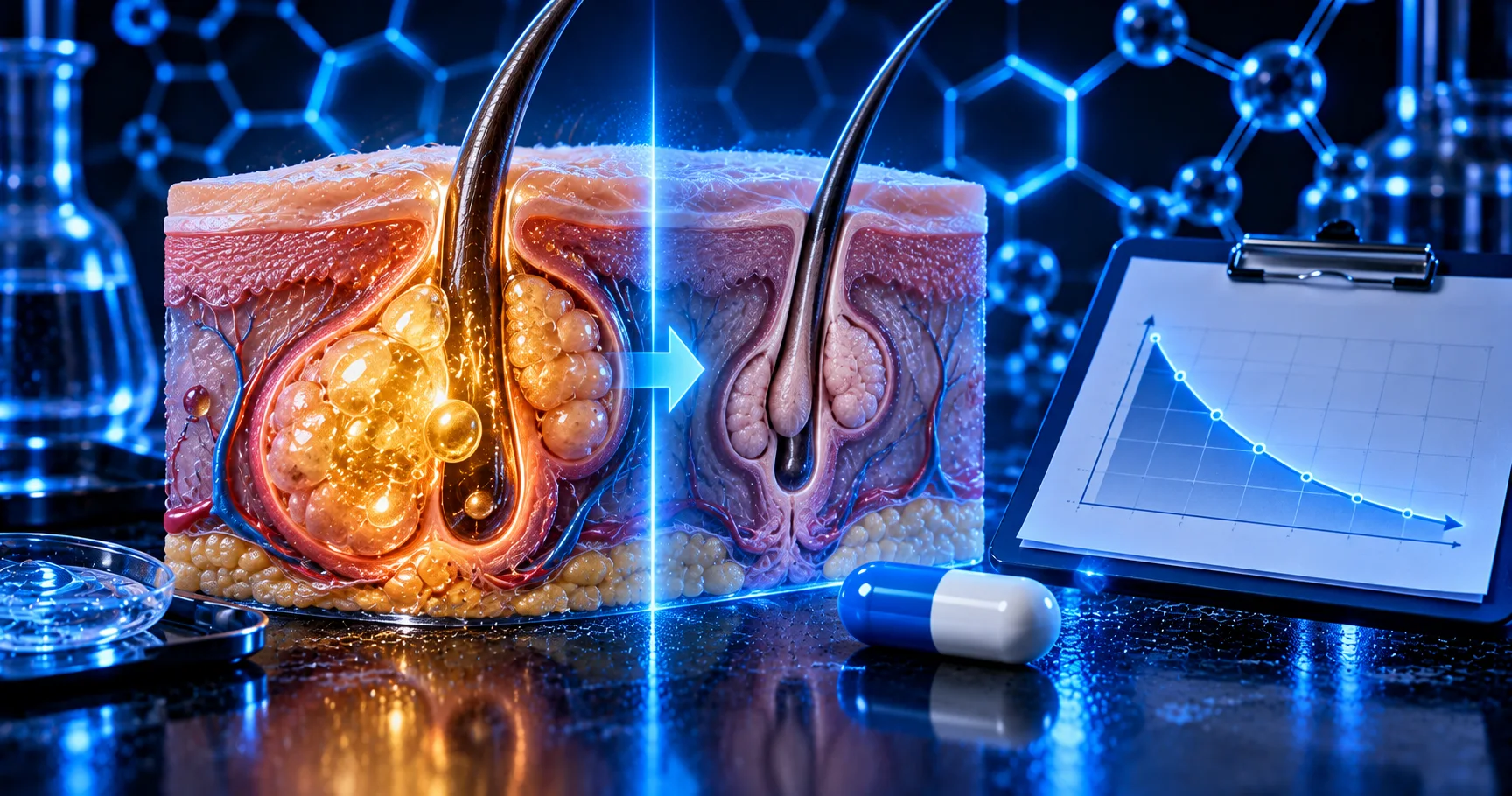
Isotretinoin is a vitamin A derivative that binds retinoic acid receptors in the sebaceous gland and triggers programmed cell death in the oil-producing cells. Within a month the glands shrink by about half and sebum output drops by up to 90 percent. Without oil the follicle cannot plug, the bacteria that feed on sebum collapse, and the inflammatory cascade that produces cysts stops at the source. The drug also normalises the rate at which follicle cells shed, which is what clears the plugged pores that appear as the purge, and it reduces inflammation directly.
The gland shrinkage largely persists after the course. Sebum comes back to a level slightly below where it was before, and for most patients that is enough to stay clear for years. How Accutane works after you stop taking it is the whole point: the drug is gone within a week, the glands stay small.
How isotretinoin compares
Isotretinoin, full course
85 to 95 percent
Yes, 70 to 80 percent stay clear
Oral antibiotic, 12 weeks
50 to 70 percent
No
Topical retinoid
40 to 60 percent
No
Spironolactone, women
60 to 85 percent
No, maintenance
Benzoyl peroxide
30 to 50 percent
No
Does Accutane Work for Everyone?
It works best where acne is worst. Cystic and nodular acne, the deep, painful, scarring lesions that fail everything else, respond most strongly, both for initial clearing and for lasting remission, and this is the indication the drug exists for. Comedonal acne, whiteheads and blackheads without nodules, clears but relapses more often, because the follicle keratinisation that drives it is only partly a sebum problem. Hormonal acne in women clears during the course and relapses more afterwards, since the androgen signal remains, as covered in Accutane for hormonal acne. Body acne on the back and chest responds fully, four to six weeks behind the face.
Outcomes by group after one full course
Severe cystic acne, cumulative dose reached
75 to 85 percent
Moderate acne, cumulative dose reached
70 to 80 percent
Any acne, course stopped below 100 mg/kg
40 to 60 percent
Women with cycle-linked jawline acne
About 60 percent without maintenance
Comedonal acne
60 to 70 percent
Why Accutane Does Not Work for Some People
- 1The cumulative dose was too low. The skin looked clear at month four and the course ended at 90 mg/kg; relapse followed within a year. This is the most common reason and the most avoidable, explained in the Accutane timeline article.
- 2The course was stopped during the purge. Weeks two to eight look worse than the start, and patients who quit there never reach the point where the drug shows its effect.
- 3Doses were taken on an empty stomach. Isotretinoin absorbs up to 60 percent better with dietary fat; months of fasted doses can leave the real cumulative dose far below the recorded one. Lidose formulations remove this problem.
- 4A hormonal driver was never addressed. PCOS or high free testosterone regrows the glands after the course unless spironolactone or a suitable contraceptive follows.
- 5The remaining marks were mistaken for acne. Flat red and brown spots after the course are pigmentation, fade on their own, and are not treatment failure.
Is Accutane Worth It?
For severe or scarring acne, the case is not close. Every month of active cystic acne adds permanent scars, and a single monitored course prevents more of them than any procedure can later remove. The downsides are real and mostly temporary: dry lips and skin in nearly everyone, a purge, raised lipids and liver enzymes in some, joint pain, and the iPLEDGE requirements for anyone who can become pregnant. Serious harm is rare and caught by the monthly labs. For mild acne the balance shifts, and the alternatives in Accutane alternatives usually come first. For moderate acne that keeps coming back, a low dose Accutane course gives most of the benefit with a fraction of the side effects.
Getting the Most Out of a Course
- 1Finish it. If side effects push toward stopping, lower the dose and extend the course instead.
- 2Take every dose with fat: eggs, avocado, nut butter, full-fat yoghurt.
- 3Know the purge window before it arrives, and tell someone at home what to expect.
- 4Ask for the cumulative dose in mg/kg at every visit and plan the end from that number.
- 5Sort out hormonal maintenance before the course ends, not after relapse.
- 6Book a check at three to six months after finishing, when the final result is visible.
About 85 percent of patients who complete a full course at 120 to 150 mg/kg reach lasting clearance, with 85 to 95 percent lesion reduction during treatment. Over three to five years, 20 to 30 percent see some relapse, mostly minor, and 10 to 15 percent need a second course, usually after a first that ended early.
It binds retinoic acid receptors in the sebaceous glands and causes the oil-producing cells to die off, shrinking the glands by about half and cutting sebum by up to 90 percent. Without oil, pores cannot plug and the bacteria and inflammation that form cysts stop. The gland shrinkage persists after the course.
For 70 to 80 percent of patients who reach the full cumulative dose, one course is permanent. The glands stay small and sebum settles slightly below its old level. Relapse is most common after short courses, in comedonal acne, and in women with a hormonal pattern who do not follow with maintenance.
Not for everyone, but for most. Around 85 to 90 percent see significant clearance. The remainder usually had a course that ended below the cumulative target, an unaddressed hormonal driver, or doses taken without food. Cystic acne responds best; comedonal and hormonal acne relapse more often.
The drug clears the body within a week, but the shrunken glands persist, so the effect lasts years for most patients and indefinitely for many. Sebum returns to a level slightly below the pre-treatment one over two to six months. Skin keeps improving for three to six months after the last dose as marks fade.
For severe, cystic or scarring acne, yes, because it is the only treatment that stops scarring at its source and its side effects are temporary and monitored. For mild acne the alternatives come first. For moderate acne that fails other treatment, a low dose course offers most of the benefit with fewer side effects.
Accutane.org is an independent educational resource. We are not affiliated with any pharmaceutical manufacturer or healthcare provider. This content is for informational purposes only and does not constitute medical advice. Images on this site are illustrative artwork made for editorial purposes; they do not show real products, packaging or labels and are not an advertisement or an offer to sell.
Editorial Team
Comments (0)
Be the first to comment on this article.