Can You Drink on Accutane? Alcohol, Liver and Lipid Risks
Can you drink on Accutane? What alcohol does to liver enzymes and triglycerides, how much is too much, whether dose matters, and how long to wait after.
The Short Answer
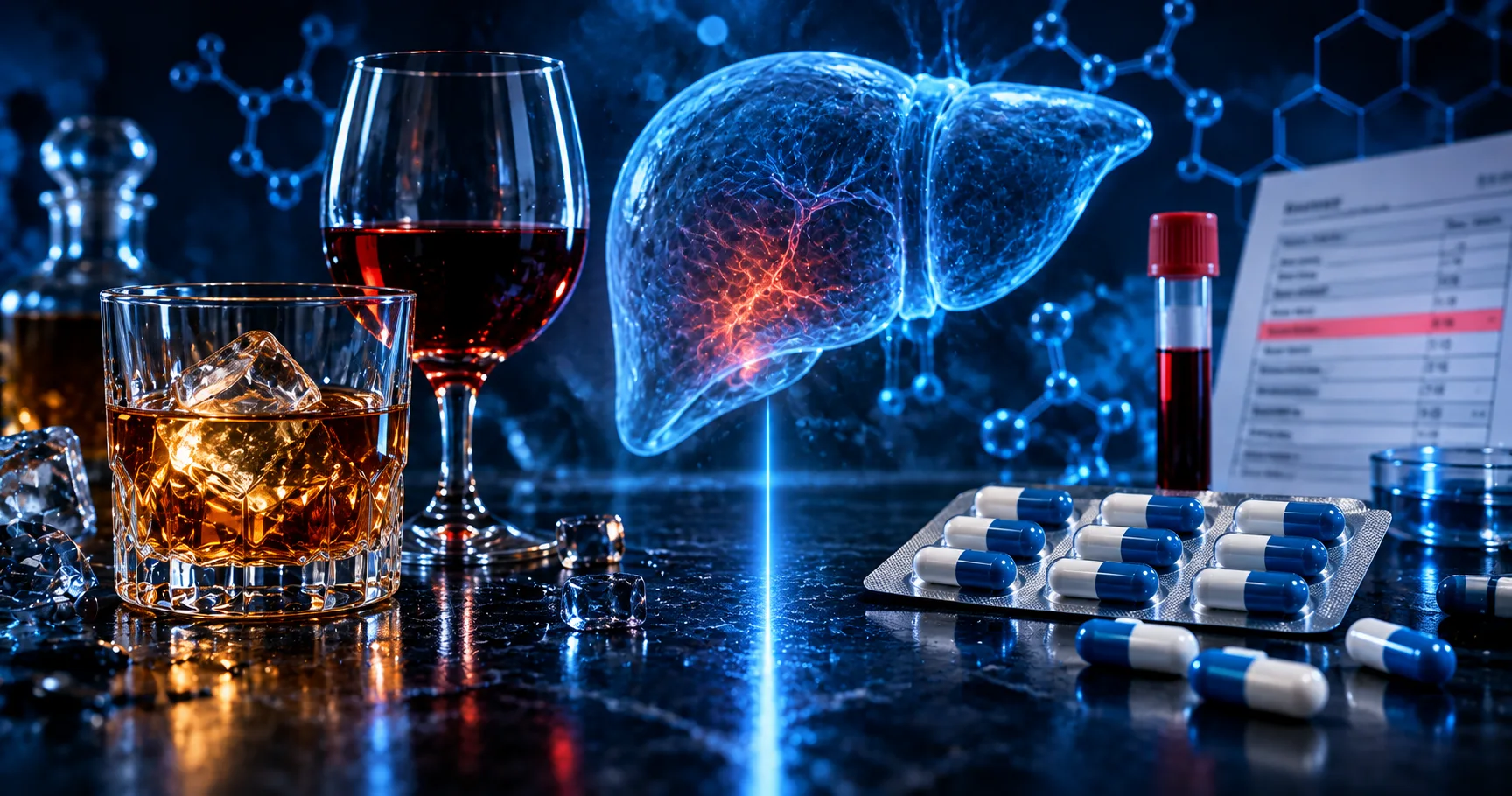
Can you drink on Accutane? The label says to avoid alcohol, and the reason is not that a drink stops the drug working. Isotretinoin and ethanol are both processed by the liver, both raise triglycerides, and both are monitored by the same monthly blood panel. One drink at a wedding will not injure a healthy liver. Regular drinking during a course raises the chance of a lab result that forces a dose cut or a pause, and heavy drinking adds a real risk of pancreatitis through triglycerides. Most dermatologists frame it as: the less the better, none in the days before blood work, and never binge.
Alcohol does not reduce how well isotretinoin clears acne. A 2009 pharmacokinetic study found moderate ethanol does not change the drug's absorption or metabolism. What changes is the margin on the liver and lipid numbers that decide whether the course continues.
What Alcohol Does on Accutane
The two overlapping effects
Liver enzymes ALT and AST
Mild rise in 10 to 15 percent of patients
Extra load on the same CYP enzymes, higher and longer elevations
Triglycerides
Up 25 to 50 percent on average, above 500 mg/dL in a few percent
Alcohol raises VLDL output, the effects add
Dehydration
Dry lips, eyes, nose, skin
Worse for two days after drinking
Sleep, mood, headache
Fatigue and headache reported by some
Both amplified the next day
Clinically apparent liver injury from isotretinoin is rare; the NIH LiverTox database lists it as a rare cause of injury, and cohort data puts serious elevations at around 1 percent of patients. What alcohol does is move the baseline. A patient with ALT at 35 and triglycerides at 120 has room; a patient already at ALT 70 and triglycerides 300 does not, and the second patient's next drink may be the one that turns a normal month into a dose reduction. The Accutane blood work article lists the thresholds.
Triglycerides are the accutane and alcohol risk most articles skip. Isotretinoin raises them through VLDL metabolism, alcohol raises them through the same pathway, and above 500 mg/dL the risk of acute pancreatitis is documented. A patient at 300 mg/dL can reach the 400 to 500 zone with moderate weekend drinking, and pancreatitis is a hospital admission.
Does Drinking on Accutane Make You Drunk Faster?
Reddit says yes, the pharmacology of accutane and alcohol says not directly. Isotretinoin does not change how ethanol is absorbed or cleared. What patients describe is the combination of dehydration, lower body water from dry skin and mucosa, fatigue and sometimes poorer sleep, all of which make the same amount of alcohol feel stronger and the hangover worse. The practical effect is real even if the mechanism is not a drug interaction: drinks land harder, and the dry lips and nose are noticeably worse for a day or two afterwards. Alcohol also feeds into the mood question, which is examined separately in Accutane and depression.
How Much Is Too Much
There is no official accutane and alcohol quantity threshold on the label, so prescribers give their own. The common guidance:
- 1Occasional: one or two drinks at an event, a few times over the course, with normal labs. Most dermatologists accept this.
- 2Weekly moderate drinking: several drinks a week. Raises the odds of an elevated result and is usually discouraged.
- 3Binge: five or more drinks in a session. The pattern that produces the triglyceride and enzyme spikes, and the one to avoid entirely.
- 4Any drinking in the 72 hours before a blood draw. A transient spike here can be misread as a drug problem and cost a month of treatment.
Can drinking on Accutane kill you? No documented case of death from a drink on isotretinoin exists. The plausible severe outcome is pancreatitis from very high triglycerides, which needs sustained heavy drinking on top of an already elevated result, and acute liver injury, which is rare and reversible when caught by monthly labs.
Does the Dose Matter?
Can you drink on Accutane 20 mg or 10 mg? The lower the dose, the smaller the drug's own effect on liver enzymes and triglycerides, so the margin is wider. Patients on low dose Accutane protocols show smaller lab changes and are more often told that occasional drinking is acceptable. The monitoring does not change, though, and neither does the advice to stay dry before the draw. At 60 to 80 mg the drug alone can push triglycerides to the edge, and alcohol has less room to work with.
How Long After Accutane Can You Drink?
Isotretinoin has a half-life of 10 to 20 hours and its active metabolite about 29 hours, so the drug is effectively gone within a week of the last dose. Most dermatologists say normal drinking can resume once the final blood panel comes back normal, typically two to four weeks after the course. Patients whose liver enzymes or triglycerides were elevated during treatment should wait for a normal result before drinking rather than counting days.
What Else to Avoid on Accutane
Accutane and alcohol is one item on a short list. Vitamin A supplements add to the retinoid load and are contraindicated. Tetracycline antibiotics such as doxycycline raise the risk of intracranial hypertension and are stopped before the course. Waxing, laser and tattoos are off limits during and for six months after, as covered in Accutane and tattoos. Excess sun without SPF burns fast. Vaping and nicotine are not a drug interaction but dry the lips and mouth further. Recreational drugs that raise heart rate or dehydrate compound the same problems alcohol does.
The label advises against it, and the reason is the liver and lipid load rather than a direct interaction. An occasional drink with normal labs is accepted by most dermatologists. Regular or heavy drinking raises liver enzymes and triglycerides on top of the drug's own effect and can force a dose reduction or a pause.
The drug keeps working on the acne. The liver processes both compounds through overlapping enzymes, so ALT and AST can rise higher and stay up longer, and triglycerides climb through the same VLDL pathway. Dehydration from alcohol also makes the dry lips, eyes and nose worse for a day or two.
Not through a drug interaction; isotretinoin does not change how alcohol is absorbed or cleared. Patients feel drinks more because the course leaves them dehydrated, dry and often tired, and hangovers hit harder for the same reason. The effect is real in practice even though the pharmacology is unchanged.
Lower doses produce smaller changes in liver enzymes and triglycerides, so there is more margin, and dermatologists more often accept occasional drinking on 10 to 20 mg. Monthly blood work still applies, and the rule to avoid alcohol for 72 hours before a draw holds at every dose.
The drug and its metabolite clear within about a week of the last dose. Most prescribers say normal drinking can resume once the final blood panel is normal, usually two to four weeks after finishing. Patients who had elevated enzymes or triglycerides during the course should wait for a normal result first.
Vitamin A supplements, tetracycline antibiotics, waxing, laser and tattoos during the course and for six months after, unprotected sun, and anything that dehydrates further such as heavy vaping. Alcohol in the three days before blood work is the specific habit most likely to cost a month of treatment.
Accutane.org is an independent educational resource. We are not affiliated with any pharmaceutical manufacturer or healthcare provider. This content is for informational purposes only and does not constitute medical advice. Images on this site are illustrative artwork made for editorial purposes; they do not show real products, packaging or labels and are not an advertisement or an offer to sell.
Editorial Team
Comments (0)
Be the first to comment on this article.